
Ten years ago, Samsung changed the paradigm of the air solutions market with the introduction of draft-free cooling. Today, Samsung’s WindFree![[Interview] A Decade of WindFree™ Innovation: Taking Another Step Forward Through Design Integrated Into Living Spaces](https://s.w.org/images/core/emoji/16.0.1/72x72/2122.png "[Interview] A Decade of WindFree™ Innovation: Taking Another Step Forward Through Design Integrated Into Living Spaces") air conditioners stand at another major turning point. While the latest model delivers even more refined performance, its appearance has become calmer and more restrained. Air conditioners are no longer appliances that simply assert their presence. Instead, they have become key interior elements that help define the character and quality of a space.
air conditioners stand at another major turning point. While the latest model delivers even more refined performance, its appearance has become calmer and more restrained. Air conditioners are no longer appliances that simply assert their presence. Instead, they have become key interior elements that help define the character and quality of a space.
Since the launch of the first-generation WindFree air conditioner in 2016 — the world’s first air conditioner to realize the functional innovation of WindFree Cooling — Samsung has continued to reshape the role of home appliances. The second generation expanded appliances into the realm of furniture, fundamentally changing the landscape of living spaces.
What changes, then, does the third generation of WindFree air conditioners bring after a decade of innovation? This year, Samsung introduced the new, AI-powered Bespoke AI WindFree Pro air conditioner, a unit that delivers cooling optimized to user environments and lifestyles. At the same time, its simple and restrained design offers a new interpretation of the relationship between appliances and living spaces.
The innovation and design excellence of the Bespoke AI WindFree Pro were further recognized by leading international design competitions, earning Winner awards at both the iF Design Award 2026 and the Red Dot Design Award 2026.
Samsung Newsroom spoke with Yuna Park of the HVAC Design Group and Sujong Kim of the Aesthetic Intelligence Group in the Digital Appliances (DA) Business to gain deeper insight into the journey behind the creation of the third-generation WindFree design.
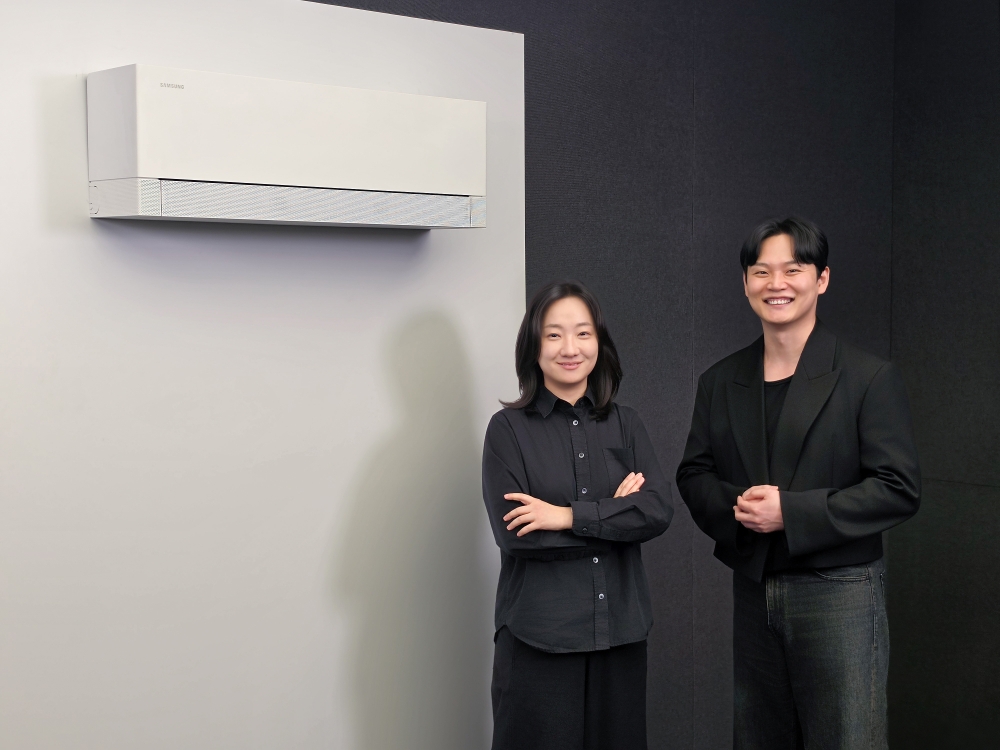
“An Air Conditioner That Resonates With Its Surroundings”: A New Paradigm for 10 Years of WindFree Design Innovation
Q. It has been 10 years since Samsung introduced the world’s first WindFree design and changed the air conditioner paradigm. What was the design direction behind the new 2026 AI WindFree air conditioner?
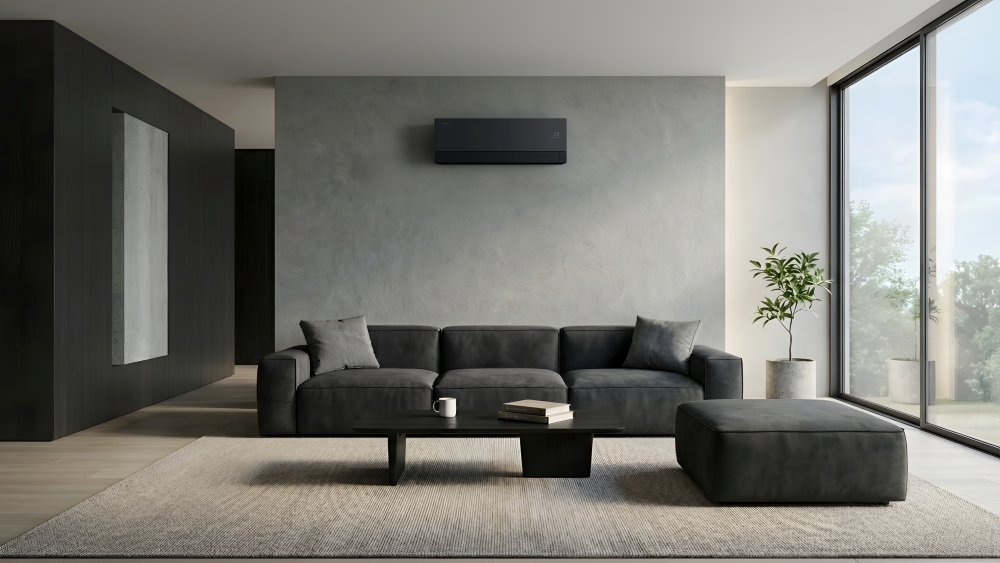
Yuna Park: The key concept that defines the third-generation WindFree design is “resonance with space.” The 2026 Bespoke AI WindFree air conditioner uses radar sensors to precisely recognize both users and their living environments, delivering the most comfortable experience for each situation. Inspired by architectural elements, we removed details that unnecessarily draw attention and focused on creating a product that naturally blends into its surroundings through distinctive material expression.
“As technology becomes more advanced, appliances should blend into the background of a space rather than draw attention to themselves. The third-generation WindFree design creates a sense of unity that blurs the boundary between appliances and architecture.”
— Yuna Park
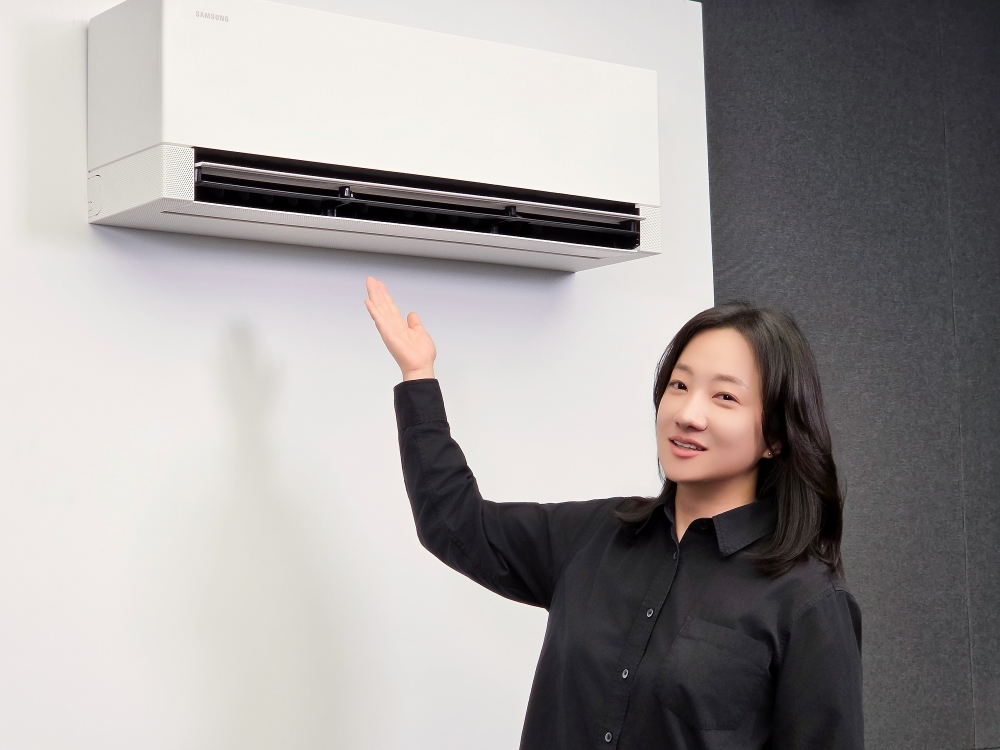
Q. What visual and structural changes were introduced in the newest Bespoke AI WindFree lineup and what design elements have been upgraded?
Yuna Park: While the second-generation design emphasized the aesthetic value of appliances through its “canvas design,” which framed the front of the product like a work of art, the third generation focuses on architectural expression that harmonizes with the entire space. We’ve simplified surface elements to their essence and redefined the relationship between function and space through refined dimensionality. The sculpted WindFree elements express the product’s functional evolution, while the areas that interact with surrounding furniture feature richer material expression to create a stronger sense of integration with the space.
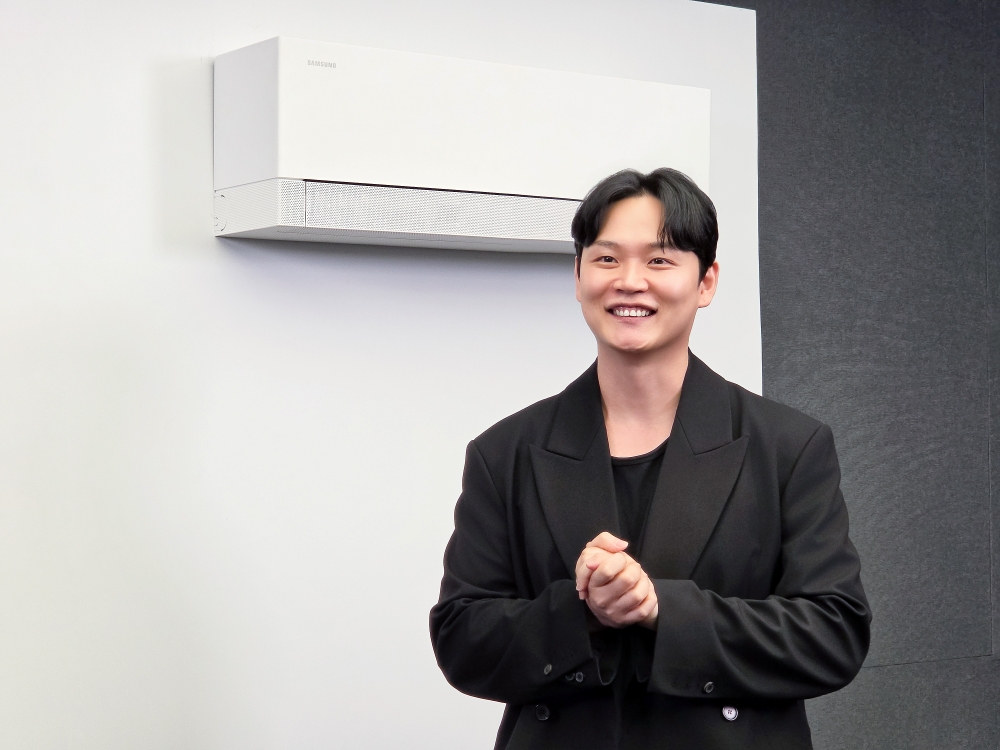
A Minimalist Design Inspired by the Wall Itself: Bespoke AI WindFree Pro
Q. The Bespoke AI WindFree Pro blends naturally into the wall as if it were part of a single surface. It creates a very different impression from conventional wall-mounted air conditioners. Where did this design inspiration come from?
Yuna Park: Traditional wall-mounted air conditioners have been limited by complex internal structures required to deliver performance, resulting in segmented forms that often felt at odds with modern interiors. This time, we returned to the fundamental idea of an appliance that hangs on a wall. We applied the clean vertical and horizontal lines often found in architecture to the product’s form. The upper section, where people’s eyes naturally rest, was intentionally kept clean so it could visually merge with the surrounding wall, while the functional area where air is discharged was clearly separated and positioned at the bottom. By dividing the layout according to architectural proportions, we were able to create a clean form that blends into the wall as though it were part of it.
“I wanted to reimagine the wall-mounted air conditioner — often seen as something that disrupts an interior — as a beautiful architectural element that feels like part of the wall.”
— Yuna Park
Q. What was the most challenging aspect of maintaining powerful cooling performance while achieving the minimalist appearance of a wall-mounted air conditioner?
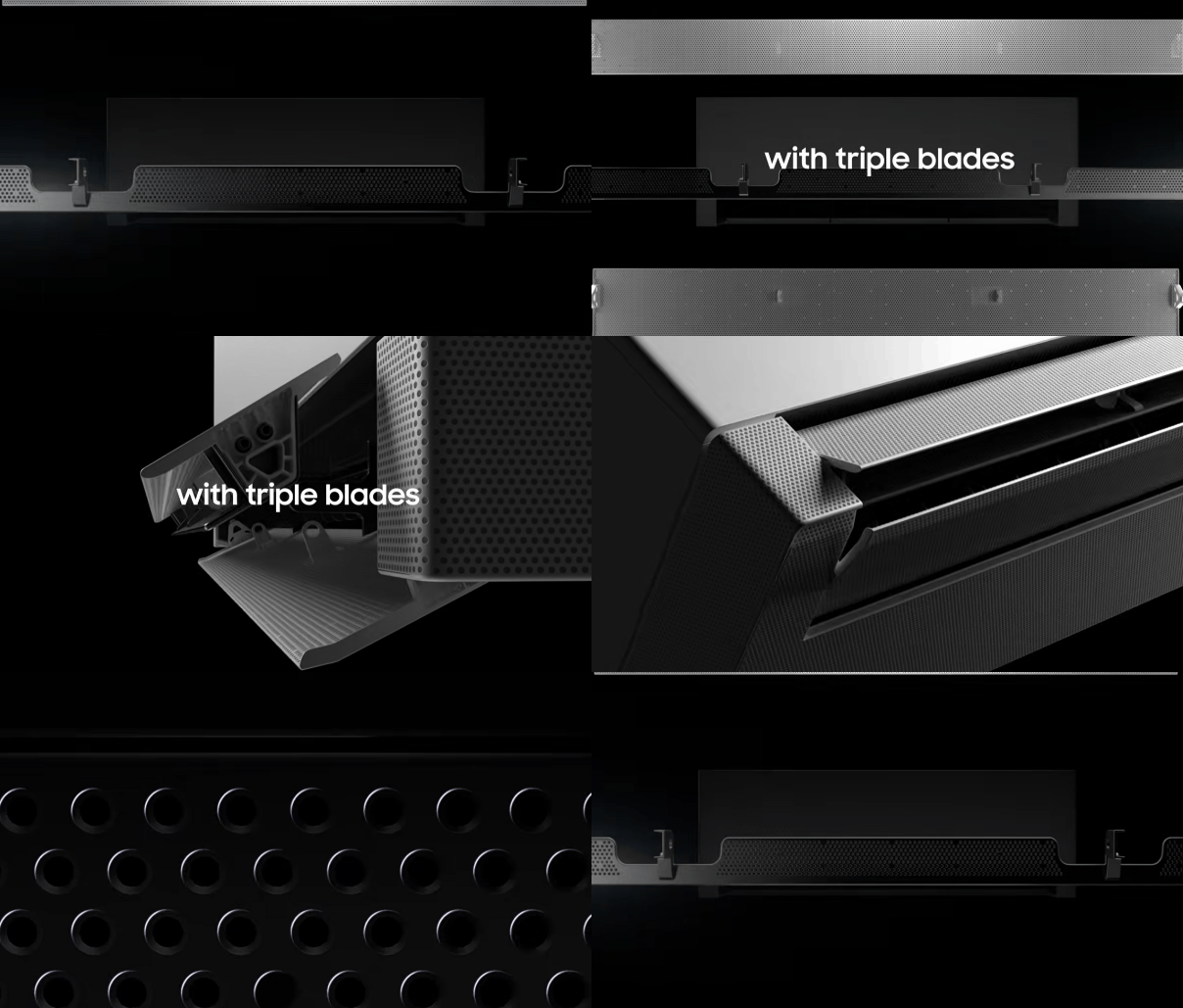
Yuna Park: The multi-blade system, which precisely controls airflow, is a complex structure that plays a critical role in the air conditioner’s performance. If exposed, it could easily disrupt the clean lines of the exterior. Therefore, achieving the right balance between performance and aesthetics required close collaboration with the engineering team from the earliest stages of development. One of the key challenges was eliminating the visual disconnect caused by the exposure of internal mechanical structures when the two blades operate. To address this, we incorporated a sophisticated secondary blade that complements the movement of the main blade. Even when the blades are fully open during operation, the internal structures remain naturally concealed, allowing us to maximize cooling performance while maintaining a clean appearance at all times.
Q. Since wall-mounted air conditioners are often installed in bedrooms, studies and other personal spaces, what was the most important consideration in selecting colors and materials?
Sujong Kim: Neutrality was our highest priority. Personal spaces tend to reflect individual tastes more strongly than shared spaces such as living rooms. To avoid imposing a particular mood, we eliminated prominent gloss finishes and bold patterns. Instead, we applied a subtle etched texture that softly absorbs light and reduces visual fatigue. For color, we selected Essential White as the primary option because of its broad appeal. We also introduced Soapstone Charcoal, a deep yet soft dark tone designed for global markets — where demand for darker interior styles continues to grow. Together, these finishes create a calm and restrained atmosphere.
Q. Are there any design details that consumers may not immediately notice but that you hope they will appreciate?
Yuna Park: To express the evolved identity of WindFree, we’ve carefully refined both the size of the WindFree micro air holes and the density of their arrangement. It is a subtle detail designed to create perfect visual balance within the product’s clean outline. Beyond the exterior, we also paid close attention to the finish quality of the internal structures. Even when glimpses of internal components are visible during operation, they are designed to appear visually organized and refined.
From Appliances to Spatial Value: Samsung WindFree Air Conditioners and the Pursuit of Sustainable Design
“I want to create a moment when users move beyond saying that the air conditioner has an impressive design and instead feel that their space — their home — has become more refined because of their WindFree air conditioner.”
— Sujong Kim
Q. Samsung WindFree air conditioners have become an element that helps complete the overall experience of a space. Looking ahead, where do you see the design heading and what goals would you like to achieve as a designer?
Yuna Park: As AI technology continues to evolve, appliances will become increasingly intelligent. What matters most, however, is not showcasing technology but delivering experiences that feel natural and comfortable to users. Future WindFree designs will continue to soften the mechanical presence of air conditioners and strengthen the sense of stability they bring to the relationship between people and spaces. As a designer, I will continue exploring new materials and design expressions that expand the user’s spatial experience. Ultimately, I want air conditioners to be recognized not simply as machines that manage air, but as distinctive objects that elevate the overall quality of a space.
Sujong Kim: Another important pillar is sustainability. The future direction of CMF1 design lies in maintaining WindFree’s unique character and design integrity while actively incorporating recycled materials and environmentally conscious finishing processes. We also hope to explore the use of natural materials often found in premium furniture and architectural interiors, such as fabric, wood and stone. Our goal is to create products that feel less like appliances and more like original elements of the architecture itself. I want users to move beyond saying, “This air conditioner has a beautiful design,” and instead feel, “My space — my home — has become more refined because of my WindFree air conditioner.”
Behind the comfort we enjoy every day lies the tireless dedication and thoughtful craftsmanship of designers who continuously refine the technologies that support it. By advancing both performance and design without compromise, Samsung WindFree air conditioners continue to enhance the value of the spaces people create. Having redefined the role of the air conditioner with each generation, WindFree is set to continue its evolution.
- Color, Material and Finishing.
 ︎
︎
Source: Samsung Newsroom, Link
Comments