
![[Interview] [Galaxy Unpacked July 2026] Inside the Engineering Behind the Latest Galaxy Z Series](https://img.global.news.samsung.com/global/wp-content/uploads/2026/07/30095534/Samsung-Mobile-Galaxy-Unpacked-July-2026-Inside-the-Engineering-Interview_main1_F.jpg "[Interview] [Galaxy Unpacked July 2026] Inside the Engineering Behind the Latest Galaxy Z Series")
On July 22 at Galaxy Unpacked July 2026, Samsung Electronics unveiled Galaxy Z Fold8 Ultra, Galaxy Z Fold8 and Galaxy Z Flip8, marking the eighth generation of the Galaxy Z series.
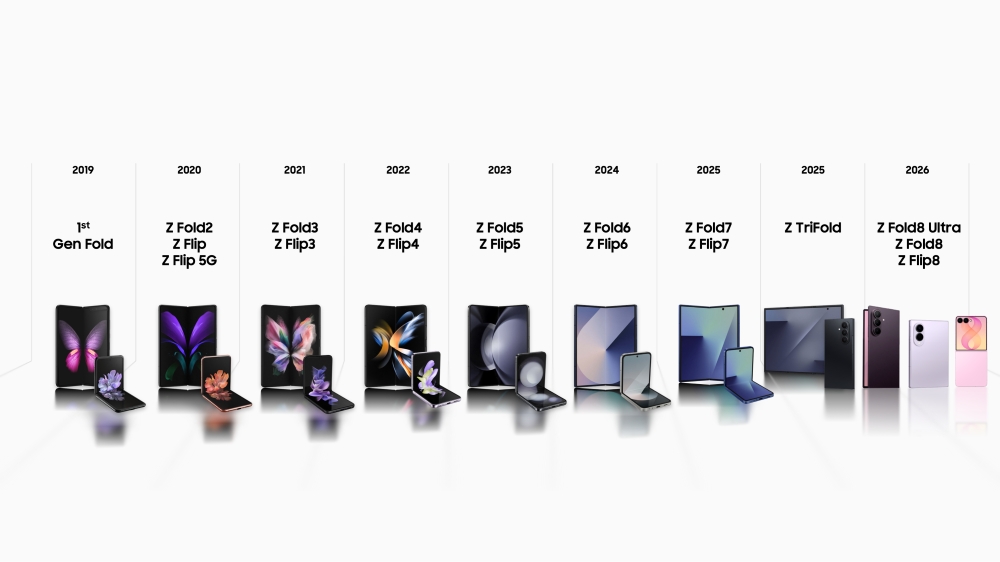
Across seven generations, Samsung has helped define the foldable category through advances in display technology, hinge engineering and materials innovation — all driven by a deep understanding of how people use their devices.
To hear how those insights guided the engineering behind Samsung’s latest foldables, Samsung Newsroom sat down with Sunghoon Moon, Executive Vice President and Senior Executive of Mobile R&D Office – Hardware, Mobile eXperience (MX) Business at Samsung Electronics.
Q. How have seven generations of user insights shaped Samsung’s approach to the latest Galaxy Z series?
From the beginning, we saw foldables as an opportunity to redefine how people interact with their smartphones — not simply as a new form factor. Through seven generations, we’ve learned how people open, carry, unfold and rely on their devices. Those insights have shaped our engineering priorities and guided each new generation of the Galaxy Z series.
Over time, three priorities became clear: larger, more immersive displays; thinner and lighter devices without compromising durability; and ultra performance while preserving the unique advantages of the foldable form factor. Delivering all three became the defining engineering challenge behind the latest Galaxy Z series.
Q. Samsung describes foldable innovation as engineering one connected system. What does that mean in practice?
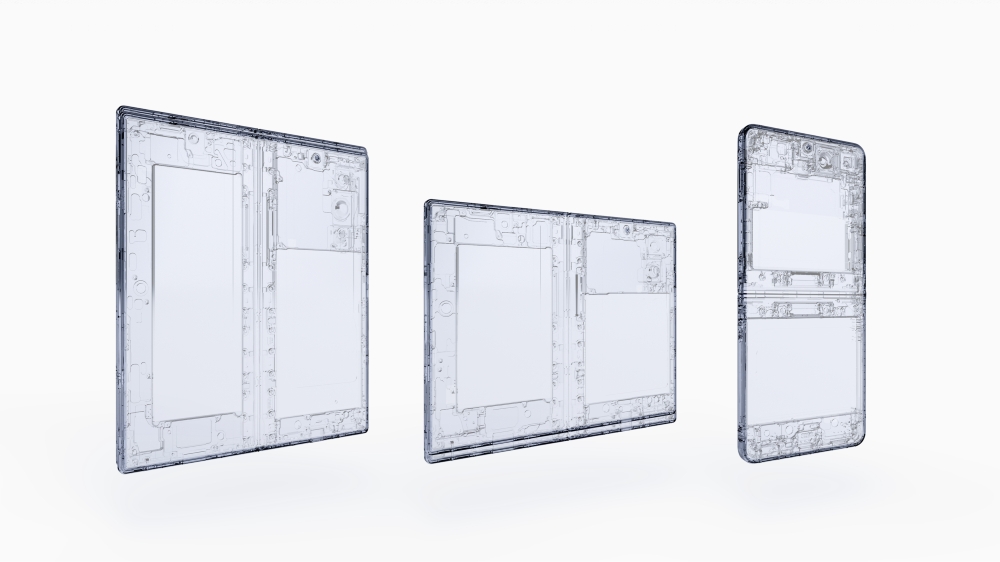
With foldables, every component is interconnected. Making a device thinner, for example, means redesigning the display, hinge, battery, thermal system and internal architecture together. Rather than optimizing individual parts separately, we engineer the entire device as one connected system. This end-to-end engineering philosophy extends from materials and component design to manufacturing, validation and the final product experience — allowing engineering advancements to become improvements people experience every day.
Q. The new Galaxy Z series introduces Flex Titanium technology. What engineering challenges did it solve?
Our goal was to make foldables thinner and lighter without compromising durability or the viewing experience. That required us to rework the display support structure protecting the ultra-thin OLED panel while preserving the flexibility needed for repeated folding.
Used in demanding industries such as aerospace, titanium offered the strength and resistance against permanent deformation essential for a foldable display. But selecting the material was only the beginning. The real challenge was developing the processing, structural design and manufacturing expertise needed to make titanium suitable for repeated folding.
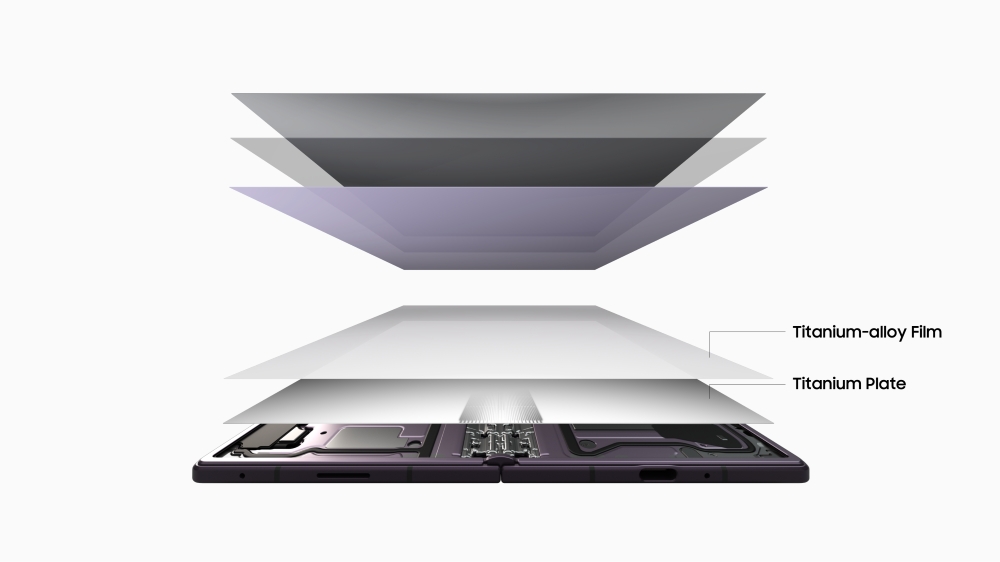
Flex Titanium combines two titanium-based elements. The titanium plate beneath the display serves as the primary structural support, helping absorb pressure and impacts from both the front and rear of the device. A precision-engineered lattice structure — created through a hybrid manufacturing process — allows the plate to remain flexible while maintaining structural strength. Beneath the display panel, the titanium-alloy film provides the strength, flexibility and elastic recovery needed to support repeated everyday folding, even at a thickness of just tens of micrometers — roughly one-third the thickness of a human hair.
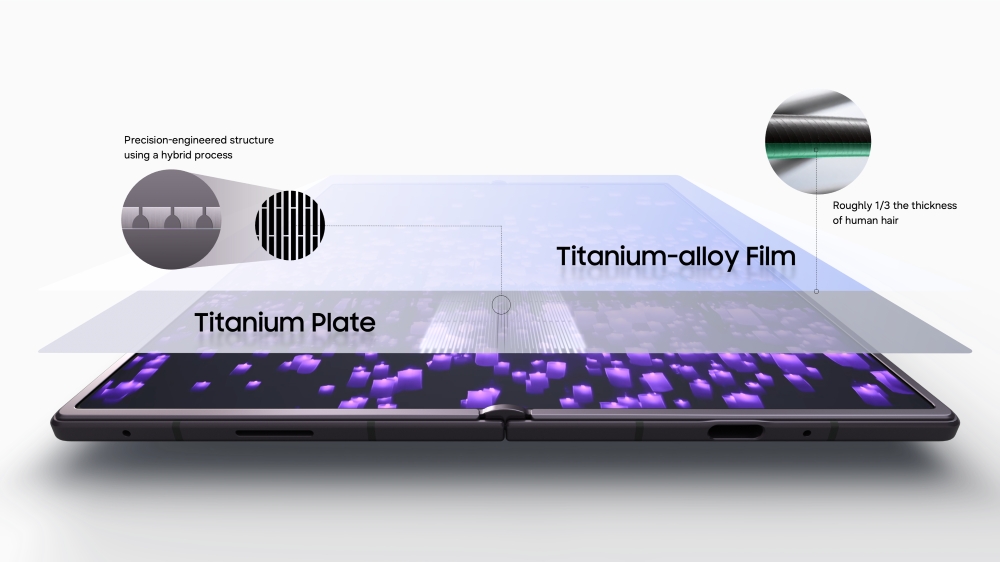
Together, these innovations strengthened the display support structure while reducing display module thickness by 10%, creating additional space for the battery, thermal system and camera. For users, that translates into a thinner, lighter device with a flatter display and reduced crease visibility.
Q. How did Samsung reinvent the battery system for the latest Galaxy Z series?
Users expect longer battery life, faster charging and a thinner foldable — without compromising safety, stability or long-term reliability. Meeting those expectations required reengineering the battery system, not simply increasing battery capacity.
We introduced a silicon-carbon anode to improve energy density, but the innovation extends beyond the anode. Because silicon-carbon materials are more reactive, maintaining long-term stability under high-voltage conditions meant optimizing the entire battery system. Improvements to the display structure also created additional internal space, allowing us to redesign the battery system while preserving a slimmer form factor. As a result, Galaxy Z Fold8 Ultra features a 5,000 mAh battery.
The same philosophy shaped charging. Rather than applying a single solution across the lineup, we developed charging architectures tailored to each foldable form factor. Galaxy Z Fold8 Ultra and Galaxy Z Fold8 use a dual-path charging architecture that helps distribute power more efficiently across the battery system, enabling faster, more stable and reliable charging while improving heat management. This supports 45 W fast charging, enabling Galaxy Z Fold8 Ultra to reach a 67% charge in 30 minutes. For Galaxy Z Flip8, the charging architecture was separately optimized for the unique spatial and thermal requirements of its compact form factor.
Q. To ensure foldables can withstand years of everyday use, how does Samsung validate durability before bringing a device to market?
For us, durability isn’t just about design — it must be proven through testing. We validated the complete foldable system under conditions that reflect how people use their devices. The latest Galaxy Z series was subjected to more than 100 reliability validation tests covering real-world conditions including drops, repeated folding, pressure, moisture and debris. Our goal was to understand how the complete device performs in everyday use, identify potential issues before they reach customers and build foldables people can trust.
Q. Looking back at the entire development process, how would you describe Samsung’s approach behind the Galaxy Z series?
Everything starts with the user. Over seven generations, we’ve transformed user insights into innovations in materials, components and the overall device experience. That philosophy continues to guide the Galaxy Z series — delivering foldables that are thinner, more durable, more capable and more intuitive year after year.
Source: Press Release
Comments